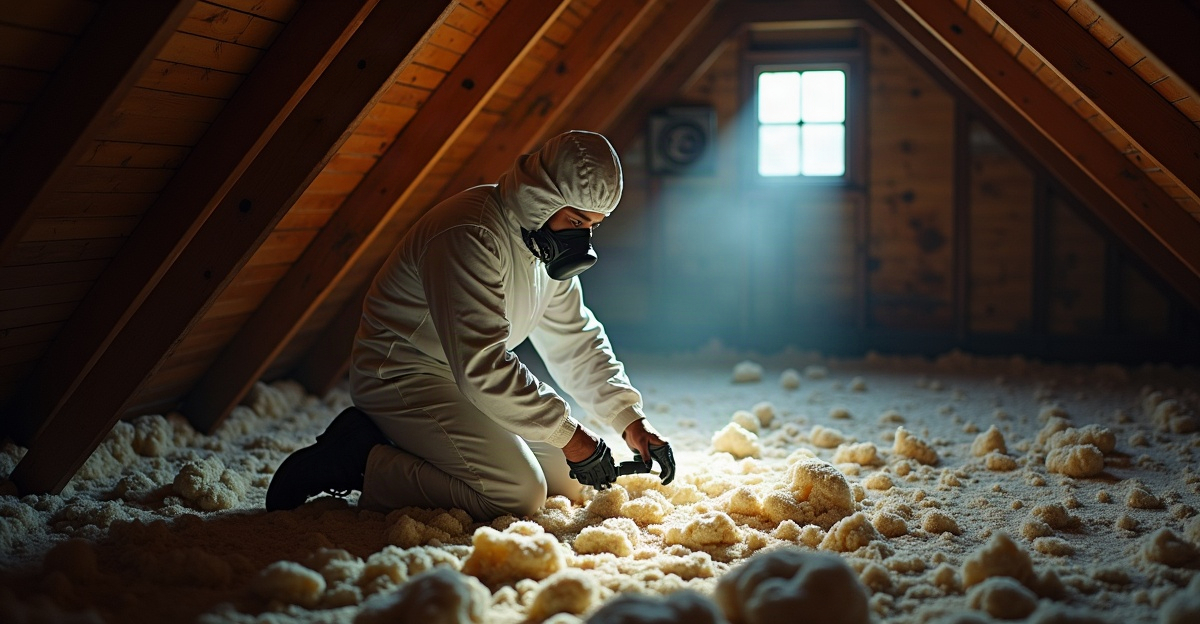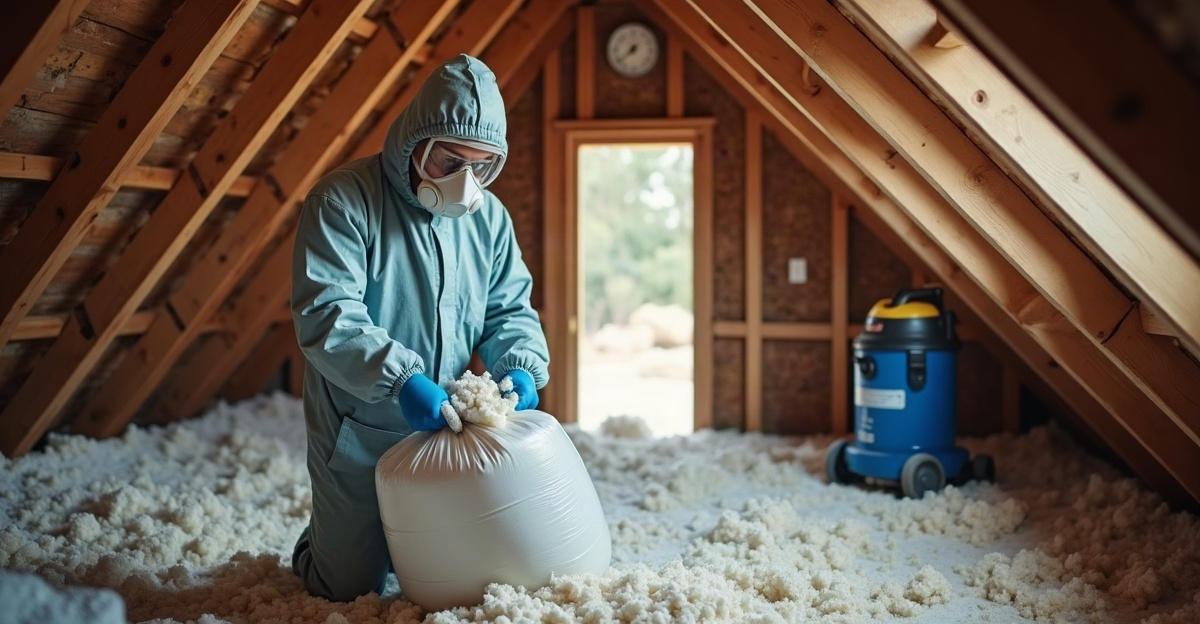
Does Insulation Burn or Resist Fire?
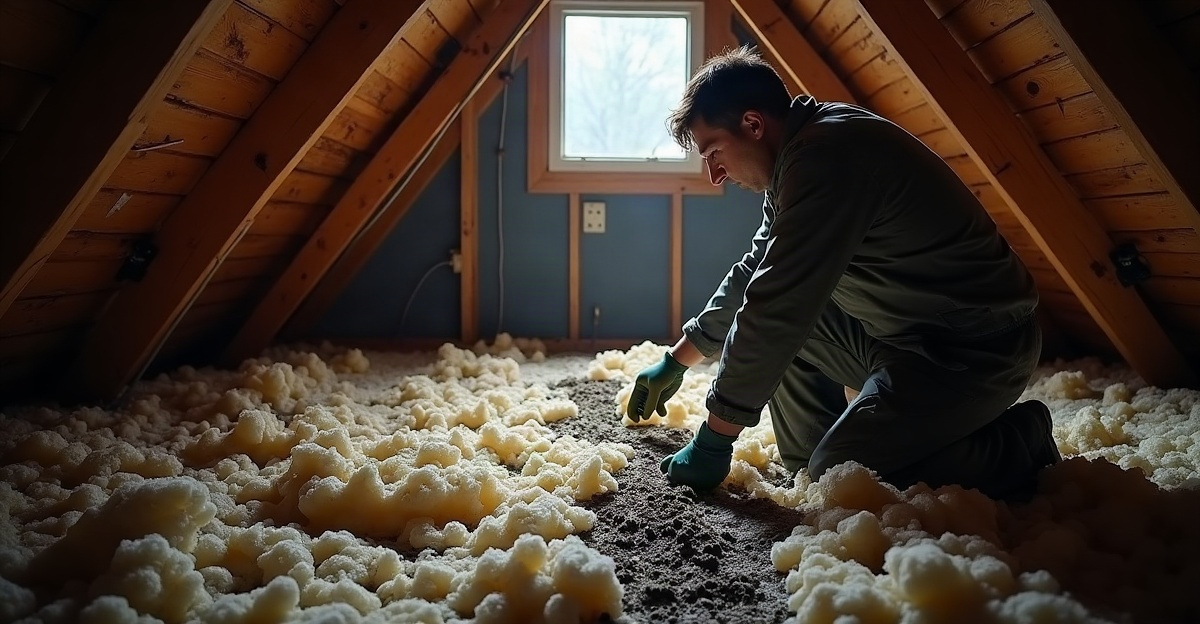
Insulation can burn, depending on its material. Fiberglass and mineral wool usually resist ignition. Cellulose, spray foam, and rigid foam can burn, smolder, melt, shrink, or release smoke. Facings, protective barriers, installation location, and the full building assembly determine whether an installation meets fire-safety requirements.
Key Takeaways
- Fiberglass and mineral wool usually resist combustion, but fiberglass facings, binders, dust, and nearby building materials can still burn.
- Cellulose uses paper-based fibers and can burn, although fire-retardant treatments can limit flame spread and smoldering in tested conditions.
- Spray foam and rigid foam insulation can burn and often need approved thermal or ignition barriers.
- R-value and flame-spread ratings do not make a wall, attic, or ceiling assembly fire-rated.
- We recommend professional evaluation after smoke, heat, water exposure, charring, melted foam, damaged facings, or exposed insulation.
The Short Answer: Insulation Can Resist Fire, Burn, Melt, or Smolder Depending on Its Type
Does insulation burn? Some insulation types resist ignition far better than others, but insulation materials do not all react the same way during a fire. No insulation product is universally fireproof in every condition or building assembly.
Fire safety depends on the specific product, its facing, where installers place it, whether required protective barriers are present, and how the entire wall, ceiling, attic, or crawl-space assembly performs. To understand the basics of home insulation, it is important to separate thermal performance from fire behavior.
Burning means a material ignites and contributes fuel to a fire. Smoldering is slow, flameless combustion that can occur in some organic materials. Melting or shrinking describes heat-related deformation; a material can melt without actively burning.
Flame resistance and flame spread describe how a material resists ignition or limits flame movement under specific test conditions. They do not mean the product is fireproof. Fire resistance refers to a tested assembly’s ability to perform during fire exposure for a defined period.
So, does house insulation burn easily? The answer depends on the insulation type. Some products are largely noncombustible, while others can burn, melt, shrink, char, or produce smoke in a fire.
How Common Insulation Materials Behave in a Fire
Does insulation burn in a fire? The following comparison shows why material type matters.
| Material Type | Can It Serve as Fuel? | Expected Behavior Under High Heat or Fire | Key Safety Considerations | Typical Protective-Covering Needs |
|---|---|---|---|---|
| Fiberglass | Glass fibers generally do not serve as fuel | May melt at very high temperatures; binders, dust, facings, and nearby materials may burn | Kraft paper facing is combustible | Cover combustible facings where required |
| Mineral wool | Generally noncombustible | Highly heat-resistant | Does not make the full assembly fire-rated or immune to fire damage | Depends on the assembly and local requirements |
| Cellulose | Yes, it is paper-based and combustible | May burn or smolder, although fire-retardant treatment helps reduce flame spread and smoldering under standardized conditions | Should not be described as noncombustible or fireproof | Depends on the application and assembly |
| Spray foam | Generally yes | May burn, char, shrink, and produce smoke | Product-specific barrier requirements are critical | Often requires a thermal or ignition barrier |
| Rigid foam: EPS, XPS, polyisocyanurate | Generally yes | May melt, shrink, burn, and produce smoke | Performance varies by product, thickness, facing, and installation | Protective coverings vary by product and use |
Does fiberglass insulation burn? The glass fibers in fiberglass insulation generally do not burn or act as fuel. However, fiberglass can melt at very high temperatures. Its binders, accumulated dust, kraft-paper facing, and nearby framing or finishes can burn. Exposed kraft facing should never be assumed safe where a protective covering is required. We install fiberglass insulation with careful attention to the product’s facing and the surrounding assembly.
Mineral wool is generally noncombustible and highly heat-resistant. That makes it a strong option for locations where heat resistance matters. Still, mineral wool does not guarantee that a wall, attic, or ceiling is fire-rated. Wood framing, wiring, finishes, air gaps, and penetrations can all affect fire performance.
Cellulose insulation consists of recycled paper, so it is combustible. Manufacturers typically treat it with fire retardants to reduce flame spread and smoldering under standardized test conditions. Those treatments improve performance, but they do not make cellulose noncombustible or fireproof.
Does spray foam insulation burn? Most spray foam products are combustible. Heat or flame can cause foam to burn, char, shrink, or create smoke. Product instructions often require a thermal barrier or ignition barrier based on the installation location. Our spray foam insulation work follows applicable product installation requirements rather than treating foam as safe to leave exposed.
Does foam insulation burn? Rigid foam products, including EPS, XPS, and polyisocyanurate, have different performance characteristics, but foam plastic insulation is generally combustible. It may melt, shrink, burn, and produce smoke. “Doesn’t burn” and “doesn’t melt” are not the same claim, and neither claim alone defines the fire safety of the full assembly.
Why Facings, Vapor Barriers, and Protective Coverings Matter
Insulation itself is only part of the installation. Kraft paper, foil facings, plastic vapor barriers, adhesives, tapes, coatings, and protective coverings all have their own fire characteristics. A noncombustible insulation fiber does not make every attached facing or surrounding material noncombustible.
Kraft paper facing is combustible. It should not remain exposed in locations where an approved covering is required. Foil facings and plastic vapor barriers vary widely by product, thickness, backing, and tested use. It is never safe to assume that one type of facing performs like another.
Drywall or another approved protective barrier may be required over certain insulation products, especially foam plastic insulation. Most foam plastics are combustible and generally require an approved thermal or ignition barrier in occupied spaces and certain unfinished areas.
These details matter in practical areas of a property. An attic may contain exposed insulation that is appropriate for that specific attic use, while foam installed beneath a roof deck may require a specific coating or barrier. A crawl space, garage ceiling, finished basement wall, or utility room may have different requirements. Missing drywall, damaged facings, or exposed foam should receive a professional evaluation instead of an assumption that the installation is safe.
Product Ratings Are Not the Same as a Fire-Rated Building Assembly
R-value measures thermal resistance. It does not measure fire safety. A high-R insulation product is not automatically more fire-resistant than a lower-R product.
Flame-spread ratings, product listings, ignition-barrier requirements, and fire-resistance ratings each address different issues. A flame-spread rating or product listing does not automatically mean that a wall, roof, attic, crawl space, garage, or commercial assembly is fire-rated.
A fire-resistance rating applies to a tested assembly, which may include framing, insulation, drywall, fasteners, joints, penetrations, doors, and other components. Even noncombustible insulation can sit inside an assembly that fails during a fire. High heat can also damage, degrade, or destroy materials that did not serve as fuel.
Requirements depend on the insulation product, installation location, occupancy, and the locally adopted building code. We recommend confirming details with a qualified insulation contractor, building professional, or local building department in Northern California.
Manufacturer installation instructions and evaluation reports, UL listings, ASTM test references, ICC code resources, and local building department guidance can help establish whether a specific product and installation meet applicable requirements. No single test or label proves that every installation is safe in every condition.
When Insulation Should Be Professionally Evaluated or Replaced
Insulation can need assessment or removal even if it did not visibly burn. Smoke, heat, firefighting water, chemical residues, moisture, and contamination can reduce performance or create indoor-air and cleanup concerns.
Visible charring or burned material calls for prompt evaluation. Melted, shrunken, or smoke-damaged foam also needs attention, even if it remains attached to the surface. Lingering smoke odor can indicate that insulation or adjacent building materials absorbed combustion residues.
Firefighting water can saturate attic or wall insulation and create moisture problems. Fire-suppression residues may also require specialized cleanup. Rodent contamination, torn kraft paper, damaged facings, exposed foam, missing barriers, and insulation displaced during renovation all deserve a closer look.
Insulation exposed to smoke, water, fire-suppression chemicals, heat, or rodent contamination may require professional assessment and removal. In attic spaces, damaged or outdated material can also affect comfort, air movement, and energy use. Our attic insulation services help identify practical replacement options without overstating what an existing material can safely do.
A Practical Fire-Safety Checklist for Northern California Property Owners
Steps for a Safer Assessment
For homeowners, landlords, property managers, and commercial property owners, start with a visual review from a safe distance:
- Identify the insulation type and check whether it has kraft paper, foil, plastic, or another facing.
- Look for charring, melting, shrinkage, smoke staining, moisture, odors, pests, or displaced material.
- Confirm that required drywall, coatings, or other protective barriers appear intact.
- Watch for exposed foam insulation, damaged facings, or missing coverings in attics, garages, crawl spaces, walls, and ceilings.
- Avoid disturbing suspicious, contaminated, or fire-damaged insulation.
Never burn or otherwise test insulation samples. That approach is unsafe and can create hazardous smoke or fumes, particularly with foam products, adhesives, facings, and contaminated insulation.
When damage, code concerns, or replacement needs are unclear, schedule a professional assessment. We serve Stockton, Sacramento, the Central Valley, and nearby Northern California communities with straightforward recommendations for damaged, outdated, exposed, smoke-affected, or questionable insulation. Contact us to request a free estimate and get clear guidance on the next steps.