Is Blown In Insulation Good? Benefits and Drawbacks
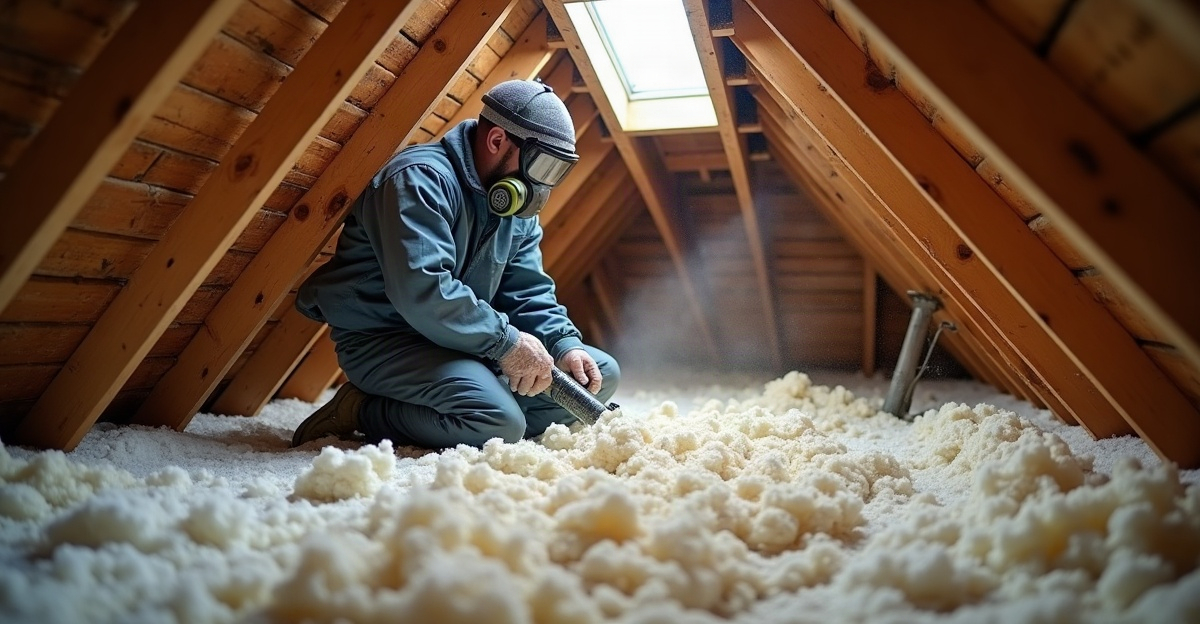
Blown-in insulation can improve attic coverage and indoor comfort. It often performs well in irregular attic spaces and suitable wall cavities. Results still depend on air sealing, moisture control, correct depth, ventilation, and the condition of existing insulation.
Key Takeaways
- Blown-in fiberglass and cellulose fill around framing, wiring, pipes, and other obstructions more evenly than batts in many attic layouts.
- Clean, dry, undamaged existing insulation can support a blown-in top-off. Wet, mold-affected, contaminated, or rodent-damaged material may require removal.
- We recommend addressing air leaks, roof or plumbing leaks, damaged ducts, pest activity, and ventilation problems before adding insulation.
- Proper installed depth and even coverage help achieve the target R-value. They also prevent low spots, settling, compression, and thermal bypasses.
- Blown-in insulation can reduce some airborne noise, but it won’t fully soundproof a room.
The Short Answer: When Blown-In Insulation Is a Good Choice
Blown-in insulation is often a good option for attics and can work well in walls when installed as dense-pack insulation. The right choice depends on the property’s condition, existing insulation, moisture history, and comfort or efficiency goals.
So, is blown-in insulation good? In many homes, yes. Blown-in fiberglass and cellulose fill irregular attic spaces effectively and can add even coverage over clean, dry existing insulation. They work especially well where framing, wiring, pipes, and other obstructions make batt installation difficult.
Still, insulation alone can’t solve every comfort issue. Strong results rely on proper air sealing, moisture control, adequate installed depth for the needed R-value, attic ventilation, and professional installation. Some properties need targeted repairs, an insulation top-off, cleanup, or removal before new material goes in.
Homes throughout Stockton, Sacramento, the Central Valley, and surrounding Northern California communities often face intense attic heat during summer, high cooling demand, cool winter nights, and aging insulation. Older homes may have thin, uneven, compacted, or damaged material that no longer provides consistent coverage. Learning what insulation does makes it easier to understand why condition and installation quality matter.
Before we recommend an approach, we assess insulation depth and condition, air leaks, attic access, roof leaks, ventilation, recessed fixtures, ductwork, pest activity, moisture history, wall construction, and local climate needs. That full assessment helps us identify the work that will make a meaningful difference.
When Blown-In Insulation Works Best—and When It Should Wait
Blown-in insulation may be worth considering if:
- Insulation levels are low, uneven, or below the attic floor joists.
- Visible attic floor joists show that coverage is insufficient.
- Rooms feel excessively hot in summer, cold in winter, or uneven from one area to another.
- Seasonal energy bills remain high after other building issues have been considered.
- Existing insulation is clean, dry, and suitable for topping off.
- The attic contains framing obstructions, pipes, wiring, or irregular spaces that are difficult to insulate with batts.
Blown-in insulation performs well on open attic floors, in irregularly shaped attic spaces, and around common obstructions. It can also provide a practical solution for blown-in insulation over existing insulation when the existing material remains clean, dry, and in good condition. In enclosed walls, dense-pack installation can improve coverage when the wall assembly supports that method. Filling open voids can also help reduce some airborne noise.
It may not be the best first step if the attic has active roof leaks, plumbing leaks, mold, rodent activity, contaminated insulation, damaged bath-fan ducts, or major air leaks. Adding new insulation over those issues can hide the problem without fixing it.
Wet, mold-affected, contaminated, or rodent-damaged insulation may require professional evaluation and insulation removal before replacement. We also recommend addressing the underlying cause first, whether it is a roof repair, plumbing repair, duct repair, pest exclusion work, or air leakage.
Water stains, damp insulation, musty odors, rodent droppings, nesting material, uneven attic temperatures, HVAC duct problems, and damaged bath-fan exhaust ducts all signal a need for inspection. Compacted, wet, or visibly deteriorated insulation deserves the same attention. Property owners with moisture, pest, or damaged-insulation concerns should arrange an inspection before adding new material.
Benefits and Drawbacks of Blown-In Insulation
The main benefits of blown-in insulation come from its coverage. Unlike pre-cut batts, loose-fill material can settle around framing obstructions, pipes, wiring, and uneven attic details. That makes it a strong choice for many attic insulation projects.
When we install it to the proper, even depth and pair it with professional air sealing, blown-in insulation can improve indoor comfort and help reduce heat movement through the attic floor. It can often be added over suitable existing insulation, and dense-pack methods can improve coverage in certain wall cavities. By filling voids, it may also reduce airborne sound transfer.
The drawbacks of blown-in insulation relate to site conditions and installation quality. Gaps, low spots, uneven depth, settling, compression, and thermal bypasses can reduce performance. A thermal bypass occurs where heat moves through or around insulation because of openings, framing paths, or unsealed penetrations.
R-value measures resistance to heat flow. A higher R-value generally provides greater resistance, but the intended R-value only works when insulation reaches the correct, even depth without major gaps, compression, low areas, or air bypasses. Product specifications and local code requirements should guide the final target for each property.
Insulation also doesn’t guarantee a specific utility-bill reduction. HVAC condition, ductwork, windows, air leakage, building design, weather, and household energy use all affect results. Blown-in material can help with sound control, but it won’t fully soundproof a room.
For blown-in insulation versus batt insulation, neither product is automatically better in every situation. Blown-in material often provides more complete coverage in irregular attic layouts. Batts can work well in open, regularly framed cavities if installed carefully without gaps or compression. Both can underperform when moisture problems, air leaks, or installation errors are left unresolved.
Blown-In Fiberglass vs. Cellulose: Choosing the Right Material
Blown-in fiberglass insulation and cellulose insulation both work well in the right application. R-value per inch ranges are approximate and product-dependent, so we use the manufacturer documentation for the exact material selected rather than treating one number as universal.
Blown-in fiberglass is commonly used for open attic floors and attic top-offs. It is lightweight, durable, and well suited to many attic applications. Is blown-in fiberglass insulation good? Yes, it can be an effective attic insulation option when installed to adequate depth and paired with air sealing.
Cellulose is also commonly used in attics and can be a strong choice for dense-pack insulation in wall cavities when conditions allow. Cellulose is typically treated with fire-retardant additives, though the specific product documentation should always confirm material properties and installation requirements.
Both materials have approximate, product-specific R-value per inch ranges that vary by manufacturer and installation method. Fiberglass products are often selected for open attic applications, while cellulose may be selected for attics or dense-pack wall work. We evaluate the required installed depth, access, current insulation, and the building assembly before choosing a material.
Settling can vary based on product type, installed density, application method, and workmanship. Low spots or reduced depth can lower real-world performance, which is why even coverage matters. Neither fiberglass nor cellulose should go over active moisture problems. Roof leaks, plumbing leaks, damp framing, and wet building assemblies need correction first.
Dense-pack insulation can be effective in enclosed walls, but blown-in fiberglass may be less suitable than dense-pack cellulose for certain wall projects. Wall depth, access, existing material, and project requirements determine the correct approach. Both materials can reduce airborne sound by filling voids, yet neither one fully soundproofs a room.
Rodent-contaminated insulation should be evaluated for cleanup and removal rather than covered with new material. The best choice depends on location, moisture exposure, existing conditions, target R-value, budget, and contractor recommendations. Our blown-in insulation service starts with those practical details.
Attics, Walls, and Sound Control: What Blown-In Insulation Can Realistically Do
Blown-in insulation is especially well suited for open attic floors and irregular spaces. In Northern California, attic temperatures can rise sharply during hot summers, while cool winter evenings increase heat loss through underinsulated ceilings. A properly assessed and installed attic system helps manage both conditions.
Older attic insulation may be thin, uneven, compacted, or damaged. We inspect it before recommending a top-off. Clean, dry material may support additional coverage. Material affected by moisture, pests, or contamination may need a different plan.
Is blown-in insulation good for walls? Dense-pack walls can improve thermal performance, but wall cavities need professional evaluation first. Cavity depth, existing insulation, wiring, plumbing, fire blocking, access points, vapor and moisture conditions, and the exterior wall assembly all affect the installation method. Dense-packing walls without a full assessment can create avoidable problems.
Is blown-in insulation good for soundproofing? It can reduce airborne sound transfer by filling wall and ceiling voids, but it won’t fully soundproof a room. Stronger sound isolation may require sealing gaps, improving doors or windows, separating wall assemblies, adding resilient channels, or building additional wall or ceiling layers based on the noise source.
Air sealing means closing unintended gaps where conditioned indoor air escapes into the attic or outdoors. Common leakage points include attic hatches, plumbing and wiring penetrations, top plates, recessed lighting, duct penetrations, and chimney or flue clearances. Clearances around heat-producing fixtures and vents must meet applicable codes and manufacturer requirements.
Attic ventilation, insulation, roof design, air sealing, and moisture control work together as one system. We assess each part before recommending attic work because adding insulation without addressing airflow or moisture can limit the benefit.
How Long Blown-In Insulation Lasts and Common Questions
How long is blown-in insulation good for? It has no fixed expiration date. Blown-in insulation can last for decades when it stays dry, clean, undisturbed, and properly installed.
Settling, compression, water damage, mold, rodent contamination, low installed depth, and physical disturbance can shorten useful performance. Insulation should be assessed if it looks deteriorated, feels wet, appears compacted, contains contamination, or no longer provides even coverage.
Is blown-in insulation good? It is often a strong option for irregular attic spaces and can work well in walls when dense-packed. Its suitability depends on existing conditions, moisture risks, air sealing, attic ventilation, material selection, and installation quality.
Does blown-in insulation settle? Some settling can occur depending on the product, density, and installation method. Proper installation helps maintain even coverage and reduce low spots.
Can blown-in insulation be added over existing insulation? Often, yes. Existing insulation must be clean, dry, and free of significant contamination or damage.
Should old insulation be removed before new insulation is installed? Removal may be appropriate if the material is wet, mold-affected, rodent-damaged, contaminated, severely compacted, or otherwise deteriorated. In those cases, resolving the source of the damage comes before replacement.
For properties in Stockton, Sacramento, the Central Valley, and nearby Northern California communities, we can provide a free insulation estimate and assessment. We’ll determine whether air sealing, an insulation top-off, repair, removal, or full replacement is the appropriate next step.