What is insulation?
Insulation is a building material that slows heat movement. It helps limit summer heat gain and winter heat loss through attics, walls, floors, and crawl spaces. Its performance relies on the right material, sufficient coverage, correct installation, air sealing, moisture control, and the building’s overall condition.
Key Takeaways
- Insulation slows heat transfer. It doesn’t generate heat or cooling. It works with HVAC equipment, ventilation, windows, and ductwork.
- Common insulation materials include fiberglass, cellulose, mineral wool, and spray foam. We choose the right option based on the assembly, moisture exposure, access, budget, and code requirements.
- R-value measures resistance to heat flow. Gaps, compression, uneven coverage, air leaks, and moisture can reduce actual performance.
- Air sealing and insulation perform different jobs. Insulation slows heat flow, while air sealing reduces uncontrolled airflow through cracks and openings.
- Professionals should evaluate wet, moldy, rodent-damaged, or contaminated insulation after we resolve the source of the moisture or pest problem.
The Role Insulation Plays in a Building
What is insulation? Insulation is material installed in a building to slow the movement of heat. It does not create heat in winter or cold air in summer. Instead, it slows heat from entering during hot weather and slows indoor heat from escaping during cold weather.
For example, a roof can absorb intense sun and heat the attic below it. Well-installed attic insulation slows some of that heat from moving into the living space below. In winter, the same insulation slows heat loss through the ceiling and roof assembly.
This matters throughout Stockton, Sacramento, the Central Valley, and surrounding Northern California communities. Hot Central Valley summers can drive attic temperatures up and increase cooling demand. Cooler winter periods can reveal heat loss, drafts, and uneven temperatures. Homeowners, landlords, property managers, and commercial property owners can all benefit from understanding how insulation affects a building.
Why Insulation Affects Comfort, Energy Use, and HVAC Performance
Effective insulation can support steadier indoor temperatures and better comfort from room to room. By reducing heat gain and heat loss, it may also reduce the workload on heating and cooling equipment in some situations.
Insulation may contribute to lower energy use, but results vary. Climate, existing insulation levels, building design, HVAC equipment, duct leakage, air leaks, window performance, occupant behavior, and utility rates all affect energy costs. We do not treat insulation as a guaranteed fix for every comfort complaint or utility bill.
Properly planned insulation also supports broader moisture and building-performance strategies. Some materials can help reduce sound transmission in walls and floors. However, insulation is only one part of the system. High bills and uncomfortable rooms may also involve undersized or poorly maintained HVAC equipment, leaky ducts, roof leaks, weak ventilation, air leakage, poor windows, or moisture intrusion.
For attic areas, professional attic insulation can address thin, uneven, or missing coverage while accounting for access, ventilation, and the condition of the space.
Where Insulation Is Installed and Common Material Options
Insulation commonly goes in attics and attic floors, exterior walls, floors over unconditioned garages, crawl spaces, rim joists, cathedral ceilings, roof assemblies, and certain mechanical or commercial building areas. Rim joists are transition areas where a foundation or floor framing meets exterior walls. They often have gaps that affect comfort.
Older properties may have limited insulation, settled blown material, compressed batts, damage from pests, or inconsistent coverage. An attic can appear insulated at first glance while still having weak spots around framing, hatches, recessed areas, and utility penetrations.
Fiberglass is available in batts and blown-in forms. It is widely used in attics, walls, and floors. Fiberglass insulation can be a practical option where the material and installation method fit the assembly.
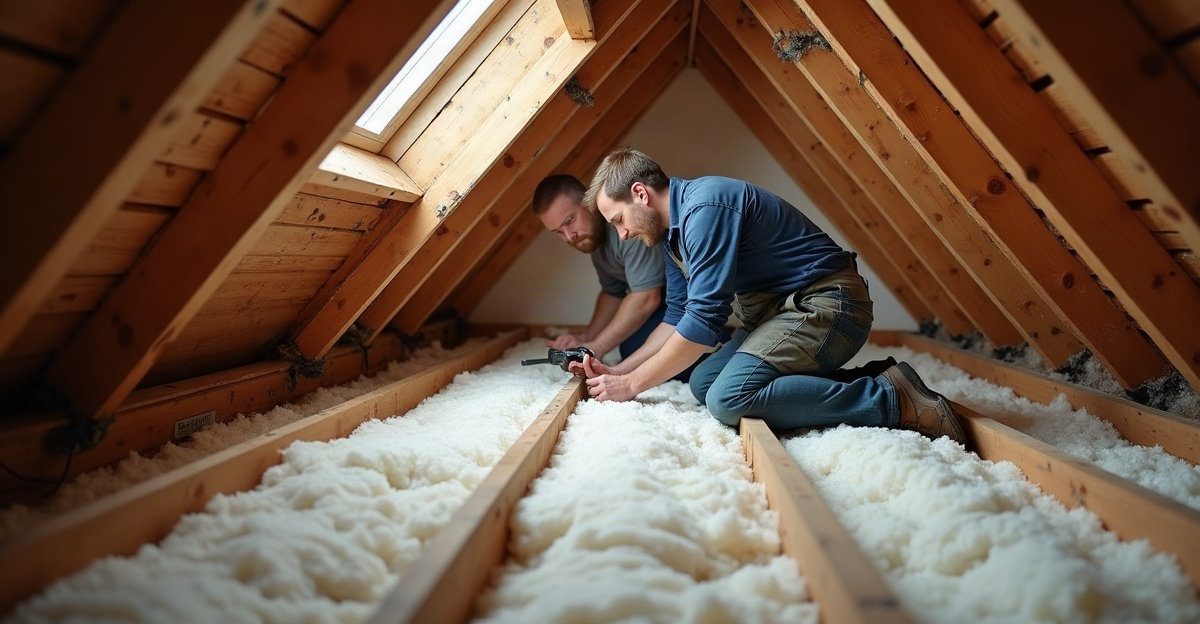
Cellulose is often blown into attics or enclosed wall cavities. It can provide useful coverage around irregular spaces when installed correctly. Blown-in insulation means loose insulation is installed with specialized equipment to create consistent coverage and depth.
Mineral wool is known for heat resistance and sound-control qualities. It is often used in walls, floors, and locations where durable batts are useful. Spray foam expands to fill cavities and may provide insulation plus air-sealing benefits, depending on the product and application. Because foam performance depends on correct product selection, thickness, moisture conditions, and installation, spray foam insulation requires informed design and professional installation.
No single material is best for every project. The right choice depends on the location, existing conditions, moisture exposure, budget, access, code requirements, and installation quality. A radiant barrier is different from bulk insulation. A radiant barrier helps reduce radiant heat gain in suitable attic applications, while bulk insulation resists heat flow through the building assembly. Radiant barriers do not replace adequate insulation.
R-Value, Installation Quality, and Air Sealing
R-value measures resistance to heat flow. This resistance is also called thermal resistance. A higher R-value generally means greater resistance to heat movement, but it does not guarantee complete building performance.
Real-world results depend on coverage depth, proper installation, compression, gaps, voids, air sealing, ventilation, and moisture conditions. Thin coverage, compressed material, open gaps, and wet insulation can all reduce performance. Local code requirements and project conditions should guide R-value decisions rather than a one-size-fits-all target.
Insulation and air sealing work together, but they are different services. Insulation slows heat flow through walls, ceilings, and floors. Air sealing reduces uncontrolled airflow through cracks, gaps, penetrations, and openings. A vapor barrier is a layer that helps limit moisture vapor movement through an assembly. The appropriate vapor-control approach depends on the building design and local conditions.
Air leaks can carry heated or cooled air past insulation, while gaps in insulation leave sections of the building poorly protected. Before adding material, we assess whether sealing accessible air leaks and correcting other defects should be part of the work.
Signs Insulation May Need Attention
An insulation inspection may be appropriate when rooms stay consistently too hot or too cold, floors feel uneven in temperature, drafts occur near ceilings or exterior walls, or utility bills rise without a clear explanation. Hot attic conditions are common during Central Valley summers, while seasonal temperature swings can make heat loss and air leakage more noticeable in winter.
Visible conditions also matter. Insulation may need evaluation if it is thin, compressed, uneven, wet, moldy, damaged, or missing in sections. Rodent nests, droppings, urine contamination, and strong attic or crawl space odors require careful attention. Water stains, roof leaks, condensation, and crawl space moisture can damage insulation and point to a separate issue that needs correction.
Older homes and commercial properties with an unknown insulation history deserve a closer look. Insulation may need to be added, replaced, or evaluated based on its coverage, contamination, moisture history, and overall condition. Adding more material alone will not resolve duct problems, roof failures, ventilation concerns, air leaks, or HVAC deficiencies.
For below-floor concerns, crawl space insulation work should start with an assessment of moisture, pests, access, and the condition of the subfloor area.
When Professional Evaluation Is the Safer Next Step
Insulation contaminated with rodent waste, mold, or moisture should not be disturbed. Suspected asbestos-containing materials require evaluation by qualified professionals before removal or renovation. Wet insulation or insulation affected by leaks should be reviewed along with the moisture source. Installing new insulation before stopping water intrusion can create additional problems.
An on-site evaluation is safer than generic advice because insulation needs vary by building age, construction type, climate exposure, moisture history, access, and local code requirements. We evaluate the full condition of the area rather than focusing only on insulation depth.
Common Insulation Questions
What is insulation made of? Common materials include fiberglass, cellulose, mineral wool, and spray foam. Each has different installation methods and suitable applications.
Does insulation keep a house cool in summer? Insulation slows heat moving from a hot attic, roof, wall, or outdoor area into conditioned living space. It supports cooling performance but does not replace proper HVAC operation, air sealing, ventilation, or window management.
What is the difference between insulation and air sealing? Insulation slows heat transfer. Air sealing reduces uncontrolled airflow through openings in the building shell. Both often matter for comfort and efficiency.
How do we know if an attic has enough insulation? Coverage depth, consistency, material condition, air leaks, access points, ventilation, and local code requirements all need review. An inspection provides a more reliable answer than a quick visual estimate.
Can old insulation be left in place? It can sometimes remain if it is dry, clean, intact, and suitable for the planned upgrade. Wet, moldy, contaminated, or badly damaged insulation may need removal after the underlying cause is addressed.
Does insulation help with high energy bills? It may reduce heat gain and heat loss, but bills can also reflect HVAC issues, duct leakage, air leaks, windows, usage patterns, and utility rates.
Is wet or rodent-damaged insulation safe to keep? It should be professionally evaluated. Moisture and contamination can affect indoor conditions, insulation performance, and the surrounding building materials.
Which insulation is best for an attic? The appropriate choice depends on attic layout, existing material, moisture conditions, access, desired coverage, budget, and code requirements. Blown-in insulation is often useful for improving coverage across open attic floors, while other materials may fit specific assemblies better.
If you have uneven temperatures, high energy bills, damaged attic insulation, crawl space moisture, or rodent contamination, a professional insulation evaluation can help identify the underlying issue and appropriate next steps. Contact ThermaCore Insulation Inc. for an inspection or free estimate when insulation is wet, damaged, contaminated, insufficient, or difficult to assess.